Chapter 15
Power stays off: outlets, panels and pumps
The questionCan I turn the power back on once the floodwater is gone?
The short answerFlooded breakers, outlets, panels and pump controls stay off after the water goes down, because federal safety agencies say parts that were under water must be inspected and usually replaced by a licensed electrician first.
By the editors of High Water at Home · Updated · about 7 minutes
Sections in this chapter
15.1 Why can't flooded breakers and outlets just dry out?
Flooded breakers and outlets cannot just dry out because the damage is inside, where you cannot see it. The Consumer Product Safety Commission's flood warning says the only safe action is to discard and replace circuit breakers, GFCIs and fuses that have been under water. It adds that even if they seem to work after a flood, they are unfit for continued use.
That release dates from 6 March 1997 and was still posted on 11 Nov 2026. FEMA's utility guide gives the reason in plain terms: corrosion from contact with floodwater can keep damaging equipment after the water recedes. Silt and salts stay in the contacts.
15.2 Who decides when the power comes back?
A licensed electrician decides when the power comes back, not the household. CDC says do not turn the power back on until electrical equipment has been inspected by a qualified electrician, and that all electrical equipment and appliances must be completely dry before returning to service.
The City of Wharton's code enforcement permit page names the 2023 National Electrical Code as its adopted electrical code, and permitted jobs wait for the permit. For a house in the unincorporated county, the county's permit office is the one to ask before an electrician starts.
| Item | What the agencies say | Who handles it |
|---|---|---|
| Circuit breakers, GFCIs, fuses | Replace if they were under water, even if they seem to work (CPSC) | Licensed electrician |
| Wiring and panel | Inspect before power returns; must be completely dry (CDC) | Licensed electrician |
| Plugged-in wet appliances | Do not touch them (CPSC, 2021) | Electrician cuts power first |
| Unplugged wet electrical appliances | Discard; shock and fire hazard (CPSC, 2021) | Household, once power is off and an electrician has cleared the area |
| Wet gas appliances | Discard; disconnect and cap the gas line first (CPSC, 2021) | Licensed plumber or the gas company disconnects and caps it before removal |
| Well pump and control box | Do not turn on; wiring checked first (EPA, CDC) | Electrician, well or pump contractor |
| Flooded heating and cooling system | Clean and check before running to avoid spreading mold (CDC) | Qualified HVAC professional |
15.3 What about appliances that got wet?
Appliances that got wet are a shock and fire risk, and CPSC's 2021 hurricane release is direct about them. It says to discard unplugged electrical or gas appliances that have been wet, and not to touch ones still plugged in. A wet gas appliance is disconnected and its line capped by a licensed plumber or the gas company before it is moved; the household's part is electrical appliances only, once power is off and an electrician has cleared the area. The same release says submerged wiring, breakers, fuses and gas valves should be replaced by a professional before anything is used.
CPSC's older warning adds that fans, motors, circuits and venting on submerged appliances should be looked at by a qualified technician, and that whole appliances may need replacing. Test any smoke alarm that got wet. A water heater that went under has its own chapter: flooded water heaters.
15.4 Can the well pump be switched back on?
The well pump cannot be switched back on until its wiring has been checked. EPA's flood leaflet prints the warning in capitals, DO NOT TURN ON THE PUMP, citing shock risk and harm to pump and well, and wants a submerged control box fully dried. CDC wants the wiring checked before the well is powered again, by an electrician or a well or pump contractor with the right qualifications.
Pump installation in Texas needs a TDLR licence. The pump-and-tank chapter deals with the equipment itself, and an aerobic septic unit's air pump and panel follow the same rule; see the septic chapter.
15.5 What if something sparks or smells when power returns?
If something sparks or smells burnt when power returns, the power should come off at once, but only by someone standing on dry ground. CDC says that frayed wiring, sparks, or a burning smell with no visible fire mean the system should be shut off at the main breaker immediately. If the panel area is wet, or you are, get everyone out and call the electric utility or 911 from outside instead.
Never touch a fallen power line; CDC says to report it to the power company. If someone has been shocked, CDC's rule is to look first and not touch, since the person may still be in contact with the source, and to call 911.
15.6 Should generators fill the gap?
Generators can fill the gap only outdoors and only through proper wiring. CDC and FEMA both warn against connecting a generator to house circuits without an approved transfer device, because backfed power can injure or kill line workers. A transfer switch is installed by a licensed electrician, and a generator never plugs into a house outlet. Distance, CO alarms and well-pump wiring are in Generators, well pumps and the transfer switch.
Questions readers ask
Will an NFIP claim cover a new breaker panel?
As FEMA's FAQ and policy text read on 11 Nov 2026, a circuit breaker box is listed under NFIP building coverage, including in a basement or under an elevated floor. See the insurance chapter for the rest.
My GFCI outlets reset fine after drying; can they stay?
CPSC says no. Breakers, GFCIs and fuses that were under water are unfit for continued use even when they appear to work.
Can the outside meter and AC unit be raised?
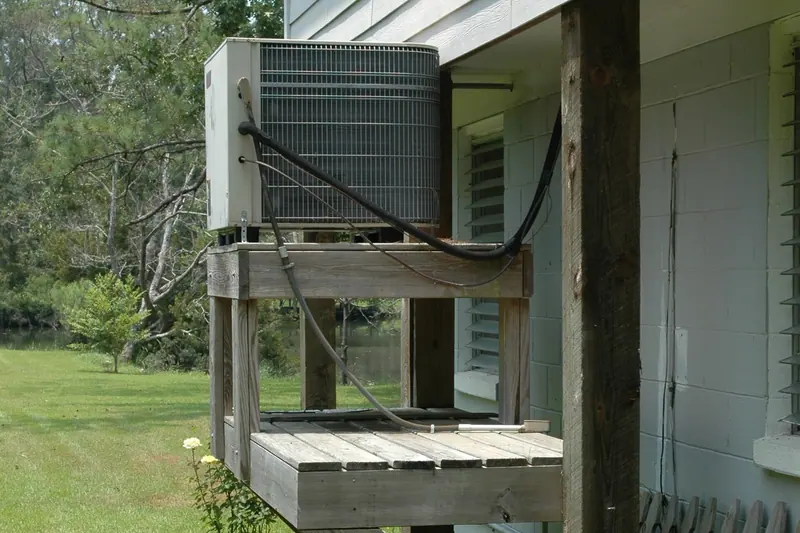
FEMA's retrofitting guide says an electric meter and incoming lines can usually be mounted higher on the same wall, and condensers can go on platforms, but meters belong to the utility, so it must agree first.
Is it safe to run the air conditioning after a flood?
If the system took on water, CDC says running it can spread mold through the house. Have it checked and cleaned by a professional with mold experience first.
Who cuts power if the panel is under water?
The electric utility or a licensed electrician. CDC's rule is that you do not enter standing water to reach a main switch.
What this chapter rests on
The electrical rules here come from CPSC releases of 1997 and 2021, CDC's electrical-hazard, reentry and well pages, EPA's flood leaflet, FEMA's P-348 and P-312 guides and City of Wharton code pages, all checked 11 Nov 2026.
Notes to chapter 15
- CPSC — Warning to Flood Victims: Replace All Gas Control Valves, Electric Circuit Breakers, GFCIs, and Fuses That Have Been Under Water (6 March 1997) · replace submerged breakers, GFCIs and fuses; technician checks on motors and venting · checked 11 Nov 2026
- CPSC — Protect Your Family Before and After Hurricane Ida (27 Aug 2021) · wet appliances, plugged-in appliances, professional replacement · checked 11 Nov 2026
- CDC — What to Do to Protect Yourself From Electrical Hazards · inspection before power returns, completely dry, sparks and burning smell, fallen lines, shock victims · checked 11 Nov 2026
- CDC — How to Disinfect Wells After an Emergency · well wiring checked before power returns · checked 11 Nov 2026
- EPA — What to Do After the Flood (EPA 816-F-05-021) · do not turn on the pump, dry control box, boots and gloves · checked 11 Nov 2026
- FEMA — P-348, Protecting Building Utility Systems From Flood Damage (2017) · corrosion after recession, backfeed danger · checked 11 Nov 2026
- FEMA — P-312, Homeowner's Guide to Retrofitting, 3rd ed. (2014) · raising meters and condensers with utility permission · checked 11 Nov 2026
- CDC — Reentering Your Flooded Home · flooded HVAC and mold, generator connection rule · checked 11 Nov 2026
- City of Wharton — Building Permits & Inspections · 2023 NEC adopted, permits before work · checked 11 Nov 2026
- TDLR — Water Well Drillers and Pump Installers · licence needed to install a well pump · checked 11 Nov 2026
- FEMA — Flood Insurance Coverage for Basement Contents? (FAQ) · circuit breaker under building coverage · checked 11 Nov 2026