Chapter 14
Floodwater in the house: what it carries
The questionIs the floodwater in my house dangerous to touch or walk through?
The short answerFloodwater in the house is dangerous because it can carry sewage, household and farm chemicals, germs, debris and animals, and it can be electrified, so the safest plan is to stay out of it.
By the editors of High Water at Home · Updated · about 6 minutes
Sections in this chapter
14.1 What is in floodwater?
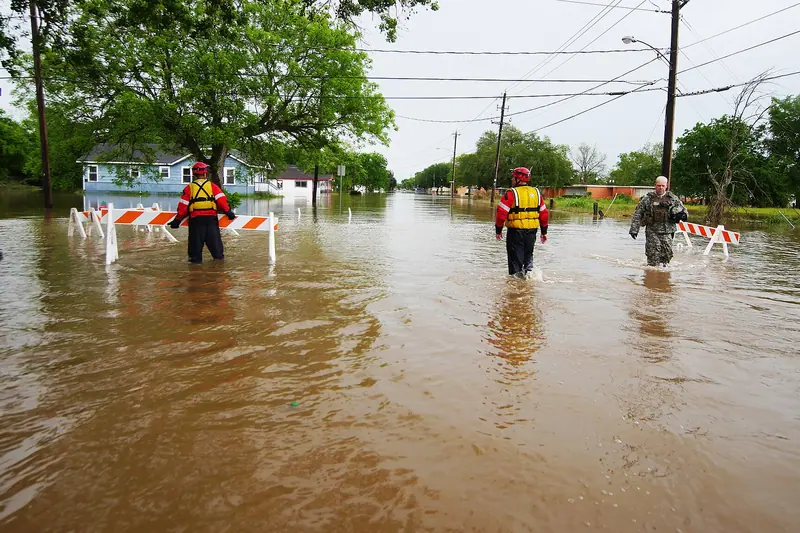
Nobody can say for sure what is in floodwater at a given moment, and CDC starts there. Its floodwater safety page says we don't know exactly what is in floodwater at any given point, then lists what it can carry. In Wharton County that list covers whatever the Colorado River, Caney Creek or a rain-filled street ditch picked up on the way: yard and barn chemicals, fuel, septic and city sewage.
| Hazard | Where it comes from | Why it matters |
|---|---|---|
| Sewage and germs | Backed-up drains, flooded septic tanks, overflowing sewers | Illness through mouth, eyes and cuts |
| Hazardous waste | Household, medical and industrial chemicals | Burns, poisoning; not removed by boiling |
| Debris | Fences, lumber, nails, glass | Puncture wounds and falls |
| Animals | Rodents and snakes moving with the water | Bites; animals shelter indoors after |
| Electric current | Downed or underground lines, wet wiring | Shock in water that looks harmless |
CDC also says a home that has flooded may be contaminated with sewage. The routes are in the chapter on drains backing up: a city main running full, or a septic field pushing water back toward the house.
14.2 Why should nobody walk or drive through it?
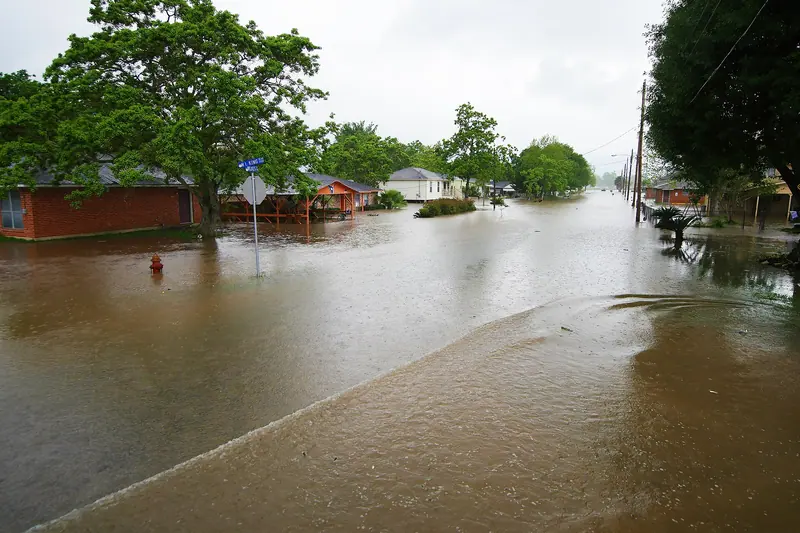
Nobody should walk or drive through floodwater because it can knock you down, carry you off or carry current. The National Weather Service's Turn Around Don't Drown message, as Ready.gov repeats it, puts it in numbers: water moving at a depth of just six inches can take your feet out from under you, and a foot of it can float a car away. CDC adds that floodwater is a drowning risk for anyone, whatever their swimming ability.
Inside the house, the risk is current. Ready.gov warns that underground or downed power lines can electrically charge the water. Stay out of flooded rooms, crawl spaces and garages while there is any chance the power is on.
14.3 Who should stay out entirely?
Children, and anyone with a weak immune system or lung disease, should stay out entirely. CDC says even shallow standing water can be dangerous for small children, and Ready.gov says children should not take part in disaster cleanup. Ready.gov also says people with asthma or other lung conditions, or with weakened immune systems, should not enter buildings where mold can be seen or smelled.
Pets belong away from the water too. Keep them where they cannot drink from puddles or lick wet floors.
14.4 What if cleanup puts you in contact with it?
If cleanup puts you in contact with floodwater, once it has stopped rising and the power is confirmed off, cover up and keep the time short. CDC's advice is that the best protection is to stay out; if you must enter floodwater, wear rubber boots, rubber gloves and goggles. For cleanup, Ready.gov adds heavy work gloves, protective clothing and boots, and masks when dealing with mold or debris.
That gear is for germs and grime, not for electricity. An EPA flood leaflet for well owners is clear that rubber boots and gloves will not protect you from electric shock.
- Confirm the power is off before anyone enters.
- Put on boots, gloves and eye protection.
- Cover any cut or scrape with a waterproof bandage first.
- Wash skin with soap and clean water as soon as you are out.
- Wash work clothes in hot water and detergent, apart from other laundry.
14.5 What about cuts and wounds?
Cuts need extra care, because floodwater can infect them. CDC says to keep open wounds out of floodwater and cover them with a waterproof bandage. It names Vibrio, bacteria that live in some coastal waters, as one cause of skin infections when a wound is exposed, which is worth knowing on the Gulf Coast.
Watch any wound for redness, swelling or oozing, and get medical care if they appear. For a puncture or a dirty wound, CDC says a health care professional should decide whether you need a tetanus booster, based on your records.
14.6 When does the house become safe to clean?
The house becomes safe to clean once the water is out, the power is confirmed off, and the space has aired. CDC says that if a flooded home has been closed up for several days, assume it has mold, and to air it out for at least 30 minutes before staying inside. Porous things that cannot be disinfected, such as wall coverings, cloth, rugs and drywall, go out. Bleach ratios and the rule never to mix bleach with other cleaners are in Cleaning sinks, tubs, toilets and drains. Tap and well water may not be safe yet either; see whether the tap is safe.
Questions readers ask
Can floodwater make my drinking water unsafe?
It can, if it reached a private well or if the public system lost pressure. Follow your water system's notice, and keep a well that went under off the drinking list until it has had shock chlorination and a clean result from an accredited lab. The well disinfection chapter covers that.
Is it safe to let the children help sweep out water?
No. Ready.gov says children should not take part in disaster cleanup, and CDC warns that shallow standing water is dangerous for small children.
Does boiling make floodwater safe to use?
Boiling kills germs but does not remove chemicals, as CDC notes. Floodwater carrying fuel or farm chemicals is not made safe by boiling.
Should the attic be the place to wait out rising water?
Ready.gov says not to climb into a closed attic, where you can be trapped by rising floodwater. Go to the highest level that still lets you get out, and call 911 if you are trapped.
How soon should a cut from cleanup be seen?
Get care for any sign of infection, such as redness, swelling or oozing, and ask a health care professional about a tetanus booster for puncture or dirty wounds, as CDC advises.
What this chapter rests on
This chapter draws on CDC's floodwater and reentry pages, Ready.gov's flood and hurricane pages, an EPA flood leaflet and the NWS Wharton gauge record, all as checked on 11 Nov 2026. It gives no figures on illness rates after local floods, as no Wharton County data was found.
Notes to chapter 14
- CDC — Safety Guidelines: Floodwater · what floodwater carries, stay out, gear, small children, wounds, Vibrio, tetanus, washing, discarding porous items · checked 11 Nov 2026
- CDC — Reentering Your Flooded Home · sewage contamination, mold after closure, airing out 30 minutes · checked 11 Nov 2026
- Ready.gov — Floods · six inches and one foot of moving water, children and cleanup, at-risk people and mold, cleanup gear, closed attics · checked 11 Nov 2026
- Ready.gov — Hurricanes · power lines charging floodwater · checked 11 Nov 2026
- EPA — What to Do After the Flood (EPA 816-F-05-021) · rubber boots and gloves do not stop shock · checked 11 Nov 2026
- NOAA/NWS — National Water Prediction Service, gauge WHAT2 · 48 ft impact statement · checked 11 Nov 2026
- CDC — Drinking Water Advisories: An Overview · boiling does not remove chemicals · checked 11 Nov 2026