Chapter 7
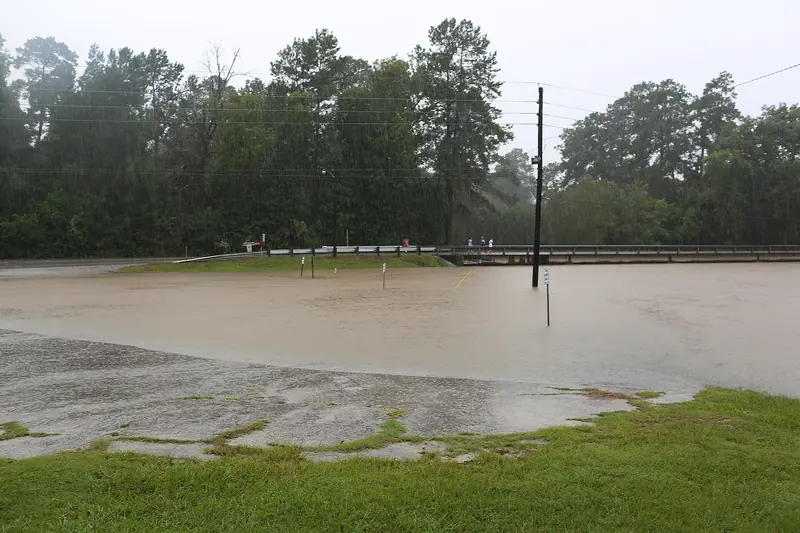
Septic systems when the ground is soaked
The questionWhat should I do with my septic system when the yard is flooded or waterlogged?
The short answerSeptic systems in soaked ground stop draining because the drainfield soil is already full of water, so the answer is to send the system as little water as you can until the ground dries.
By the editors of High Water at Home · Updated · about 7 minutes
Sections in this chapter
- 7.1 What happens to a septic system when the ground is soaked?
- 7.2 Is your system gravity-fed or powered?
- 7.3 How much water can you use when the field is soaked or the power is out?
- 7.4 Should you pump the tank when the yard is flooded?
- 7.5 What should you do about power to an aerobic unit?
- 7.6 Why keep off the drainfield?
7.1 What happens to a septic system when the ground is soaked?
The tank keeps filling, but the drainfield has nowhere to send the water. A drainfield works by letting treated wastewater soak into dry soil; when that soil is saturated, the water backs up toward the house. The EPA's after-the-flood questions on septic systems say to hold off using it until the field has drained below the level of the water standing near your house.
Water in the street may go down well before the soil under the field drains; the EPA's 2024 flood guide says a drainfield stays out of action until the groundwater beneath it falls. The TCEQ's advice for septic owners lists seasonally saturated soil and water moving through the disposal field among the causes of system failure, and it is the owner's job to correct a failing system.
7.2 Is your system gravity-fed or powered?
Check before the storm, because the two behave differently in an outage. A gravity system, with pipes falling to a tank and on to a gravity drainfield, keeps working without electricity, Texas A&M AgriLife Extension says in Responding to Power Outages and Floods (L-5475), dated September 2008. Systems with pumps, blowers or timers stop treating and start storing when the power goes (Table 7.1).
| System type | Needs power? | In an outage |
|---|---|---|
| Gravity tank with gravity drainfield | No | Keeps working; soaked soil is still the limit |
| Aerobic treatment unit | Yes | Wastewater collects in the tanks |
| Sand filter or recirculating media filter | Yes | Wastewater collects in the tanks |
| Flow-equalization tank | Yes | Wastewater collects in the tanks |
| Low-pressure, drip or spray distribution | Yes | Wastewater collects until power returns |
7.3 How much water can you use when the field is soaked or the power is out?
As little as the household can manage. The EPA says the only way to prevent a backup while the water table is high is to relieve pressure on the system by using it less. AgriLife's 2008 guide says that with a powered system in an outage, use water only for essentials such as flushing and hand washing, and stop all use if the outage drags on or drains start running slow. Slow drains can mean the reserve is full.
- Put off laundry and the dishwasher.
- Keep showers short, or skip them for a day.
- Flush less often; toilets use about 1.6 to 2.5 gallons a flush, AgriLife notes.
- Do not pump or sweep floodwater from inside the house into the drains.
When the power comes back after more than a day, AgriLife says to skip laundry and dishwashing for another day and limit showers for at least a day. A timed system may need 24 hours to clear its high-water alarm; if the alarm stays on longer than that, call your maintenance provider.
7.4 Should you pump the tank when the yard is flooded?
No. The EPA says pumping a tank while the drainfield is flooded or saturated can make the tank try to float out of the ground and can break the inlet and outlet pipes. An empty tank is lighter than the water around it. AgriLife says the same after a flood: do not pump tanks empty or below their normal level, because the ground will usually still be saturated. Wait for the ground to dry, then have a licensed provider look at it, as the chapter on a flooded septic system explains.
The EPA adds two more cautions. Do not dig into the tank or field while the soil is wet, and do not route floodwater from inside the house through the septic tank, which can push solids out into the field.
7.5 What should you do about power to an aerobic unit?
Treat it like any other electrical equipment in a flood. AgriLife's 2008 guide says to cut power to the system at the main panel during a flood, and its 2019 well guide says to switch off an aerobic system's power before you evacuate. Do that only if you can reach the panel or switch from dry ground while you are dry. If the floor by the panel is wet, or reaching it means wading, leave it alone and ask the electric utility or a licensed electrician to cut the power, as the chapter on power that stays off explains.
If floodwater covered the air pump, control panel or other parts above the ground, AgriLife says to have a service provider inspect them before the power goes back on. If only the buried tanks were covered, the system may restart without more checks once the field has drained.
7.6 Why keep off the drainfield?
Wet soil packs down easily and does not spring back. The EPA says saturated soil is especially easy to compact, which reduces the field's ability to treat wastewater for good. Keep cars, trucks, tractors and trailers off the field, and do not park on it to get above water; the TCEQ's owner advice lists driving or parking over the system among its don'ts. Mark the field's edges now so a neighbor helping you move things knows where not to drive.
Keep the drainfield and your well in mind together. Texas wants a well at least 100 feet from a drainfield, and the wellhead chapter covers why that matters when the yard is under water. Drain backups inside the house are covered in the chapter on drains backing up.
Questions readers ask
Who issues septic permits in Wharton County?
The TCEQ's permitting database names Wharton County's authorized agent as the permit office for rural areas and for East Bernard. That work runs through the Wharton County Permit & Inspection Department; ask there if you live inside another city.
Does an aerobic system need a maintenance contract?
Wharton County's notice to aerobic owners, dated 1/28/2011, says a signed maintenance contract must be on file, with the first contract running at least two years. The TCEQ says owners may maintain their own system after that only where the local authority allows it.
Can pool chlorine tablets go in the aerobic unit after a flood?
No. The TCEQ warns never to use swimming-pool tablets in a septic disinfection unit, because they can release an explosive gas. Use only tablets made and certified for wastewater.
How can you tell which kind of system the house has?
Look for an air pump, a control panel with an alarm light, or sprinkler heads in the yard; any of those means a powered system. The county permit file for your address also describes it.
Is the smell from the yard after a flood a sign of failure?
It can be. Sewage odor or wet patches over the field mean wastewater is surfacing. Keep people and pets off the area and call a licensed maintenance provider once the floodwater has gone down.
What this chapter rests on
The advice here follows EPA's 2005 septic questions (linked from an EPA page updated 31 Aug 2026), AgriLife's 2008 guide on outages and floods, and TCEQ's owner and maintenance pages, checked on 11 Nov 2026. Reserve-capacity figures are as AgriLife stated them in 2008, and the current state rule may differ. Wharton County publishes its septic order as a scanned picture rather than text; its Permit & Inspection Department can say what it requires.
Notes to chapter 7
- US EPA — Septic Systems: What to Do after the Flood (816-F-05-029) · do not use or pump while saturated, compaction, gases, digging, floodwater in drains · checked 11 Nov 2026
- Texas A&M AgriLife Extension — Responding to Power Outages and Floods (L-5475, Sept 2008) · powered vs gravity systems, reserve capacity, water use, alarms, inspection before restart · checked 11 Nov 2026
- TCEQ — Advice for On-Site Sewage Facility (Septic System) Owners · saturated soils cause failure, no parking on the system · checked 11 Nov 2026
- TCEQ — Maintenance of On-Site Sewage Facilities · homeowner maintenance rules, pool tablet warning · checked 11 Nov 2026
- US EPA — What to Do After the Flood (816-F-05-021) · drainfields do not work until groundwater recedes · checked 11 Nov 2026
- TCEQ — On-Site Activity Reporting System, county search · Wharton County authorized agent coverage · checked 11 Nov 2026
- Wharton County — Notice to Owner/Operator of an Aerobic Treatment Unit · maintenance contract on file · checked 11 Nov 2026
- Texas A&M AgriLife Extension / TWON — ESC-058 · aerobic power before evacuating · checked 11 Nov 2026
- Texas A&M AgriLife Extension — Water Well Basics (May 2023) · 100-foot well-to-drainfield distance · checked 11 Nov 2026